Paper patch.
Lasting protection.
Mould prevention with a plastic-free paper patch.

Where it began
Established in Taiwan, with a focus on mould prevention. Produced in Taiwan.
Closer to customers
Sales presence expanded to the UK in 2011, Italy in 2020 and Bangladesh in 2026.
Easy Dispatch
Two warehouses, one in Taiwan and one in China.
Offering a Wide Range of Anti-Mould Products
Our product portfolio covers a comprehensive range of mould prevention solutions, including anti-mould patches, sprays, mould removers, packaging treatments, and desiccants.
Designed for Protection.
Made for Sustainability.

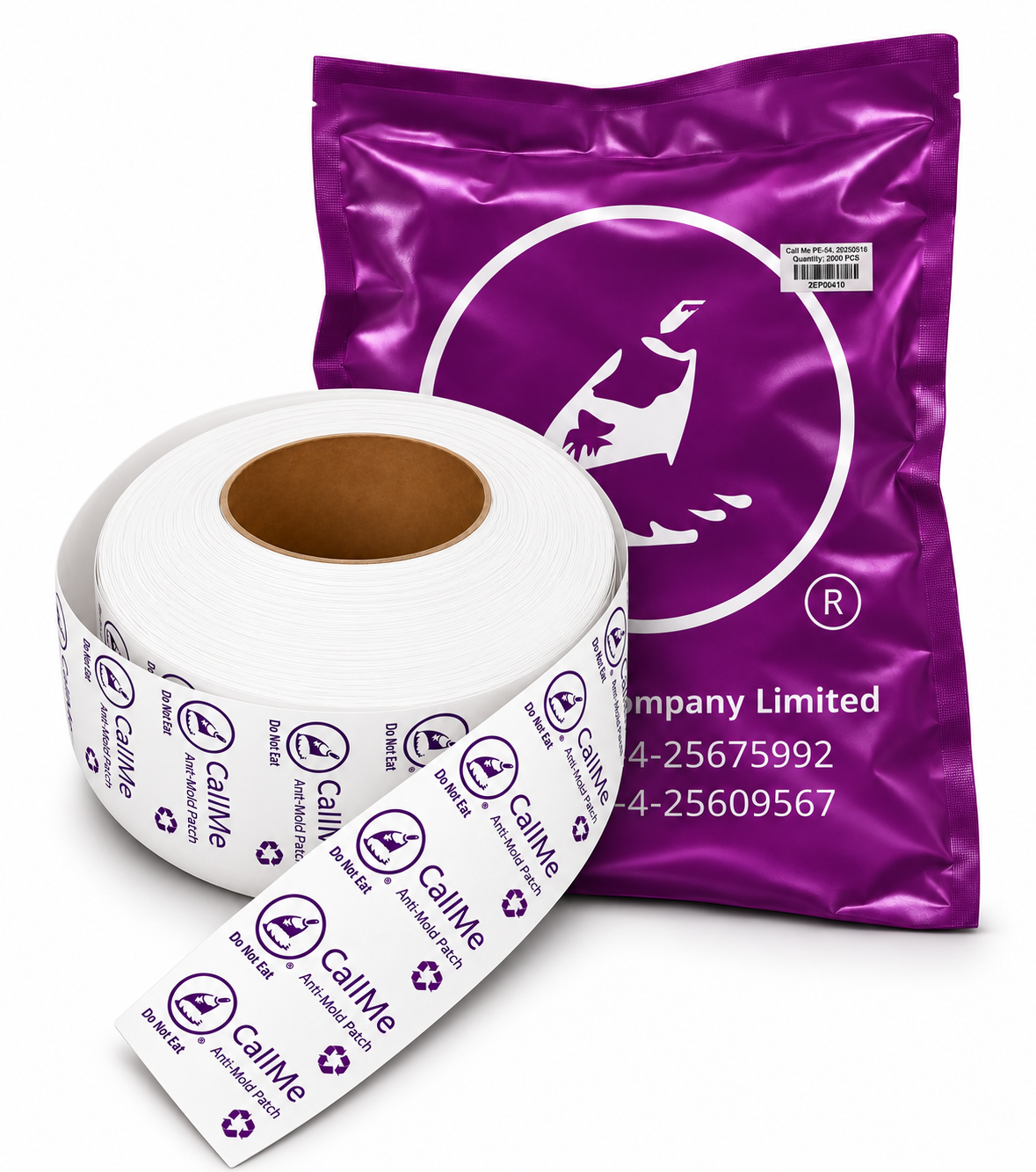
Call Me Paper · 5 × 3 cm
A plastic-free, non-adhesive paper patch.
2,000 patches per roll
One roll of patches per aluminium foil bag.
Paper
A plastic-free patch designed for paper recycling.
Plant-based ingredients
Formulated with natural antimicrobial essential oils and manufactured using patented compression technology.
Space Protection
Releases volatile ingredients to help protect the space inside the packaging from mould.
Suitable for a range of products, materials and packaging formats.
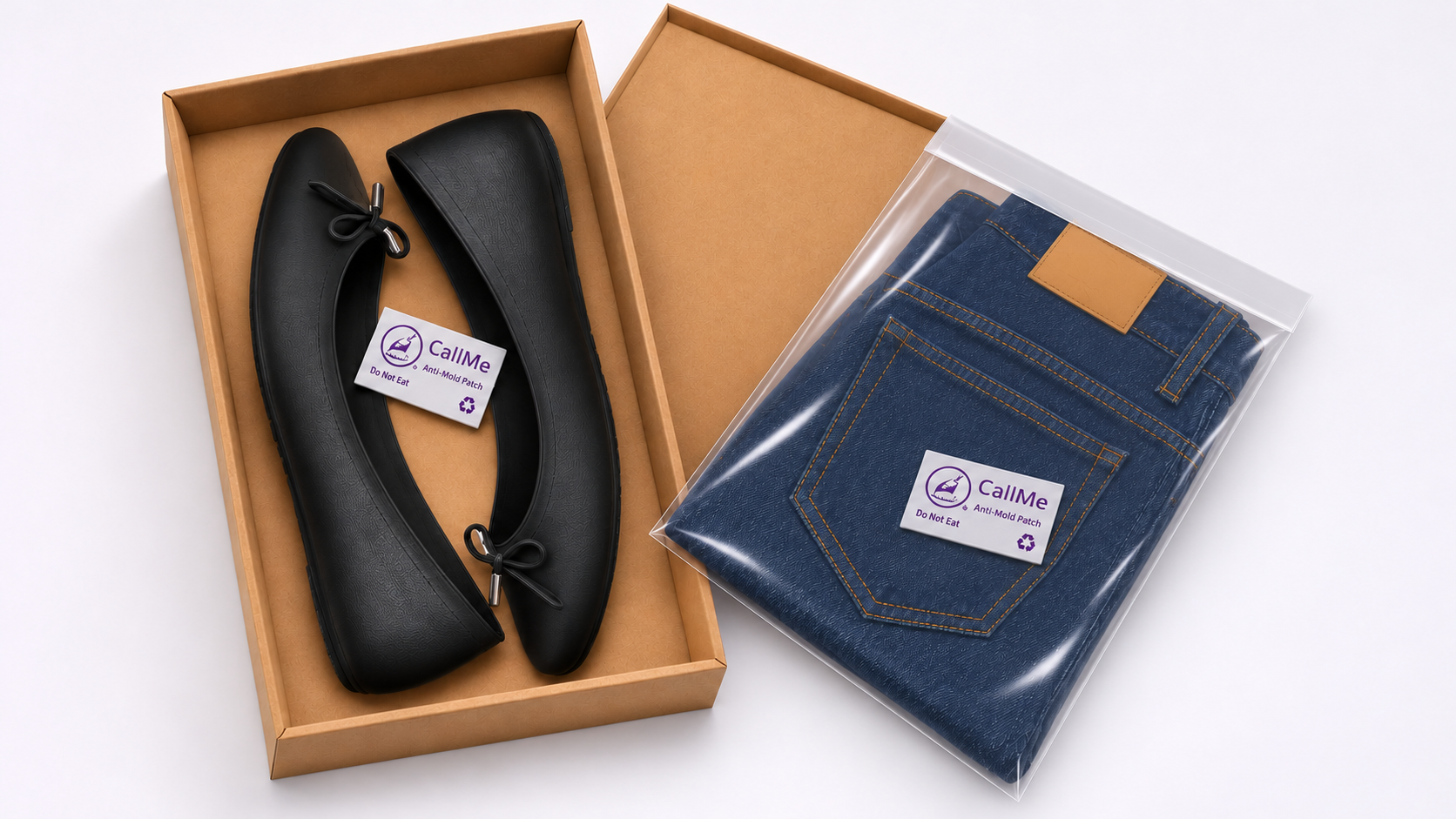
Place the patch inside the packaging. It is non-adhesive and can be separated from plastic packaging for paper recycling.
Explore the product, step by step
01 · Roll format
2,000 patches per roll.
18 Months
In unopened packaging.
14 DAYS
The volatile ingredients are released over 14 days.
Up to 6 months
Up to 6 months of protection in unopened cartons when used as directed.
How to use Call Me Paper
Polybag packaging
Place the non-adhesive paper patch inside the bag.
Carton packing
Place the paper patch inside the lined carton.
Anti-counterfeit system
Exclusive ordering contact for factories
Callme2@cleanmold.com.tw
Barcode verification for brands
Verify the anti-counterfeit code to confirm the production date, delivery date, receiving factory and quantity received. Send clear sticker photos and factory details for verification.
Monthly order reports
Monthly order updates help brands track factory orders. Check that both parties’ pro forma invoices (PIs) and payment details match.
Target mould risk.
Understand moisture control.
| What to compare | Call Me patches | Desiccants |
|---|---|---|
| Main role | Active anti-mould protection | Moisture absorption |
| How it works | Releases anti-mould gas to target mould spores. | Absorbs humidity up to its capacity |
Less moisture does not mean no mould risk.
Watch how moisture reduction and mould growth are different processes.
01 · Spores and moisture coexist.
Airborne mould spores can settle on clothing, shoes and packaging materials.
02 · Moisture decreases. Spores remain.
A desiccant absorbs moisture up to its capacity. Lower humidity does not remove mould spores or necessarily remove all moisture.
03 · Growth can become visible over time.
If enough moisture remains at the material surface and other conditions are suitable, settled spores may germinate and grow into visible mould.
In-house bun test video
Watch the original in-house steamed bun experiment.
In-house observations
01 · Test overview
Start with an overview of the samples in the supplied test photograph.
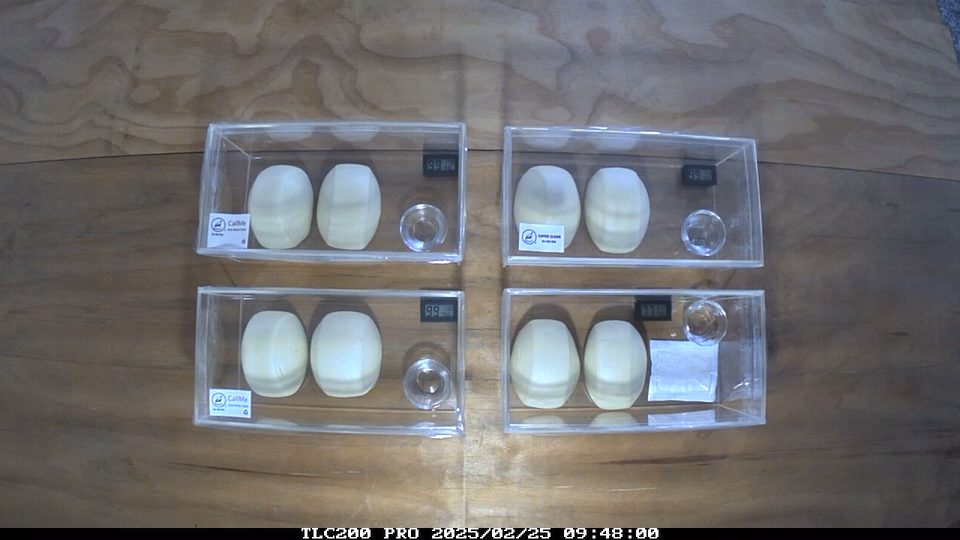
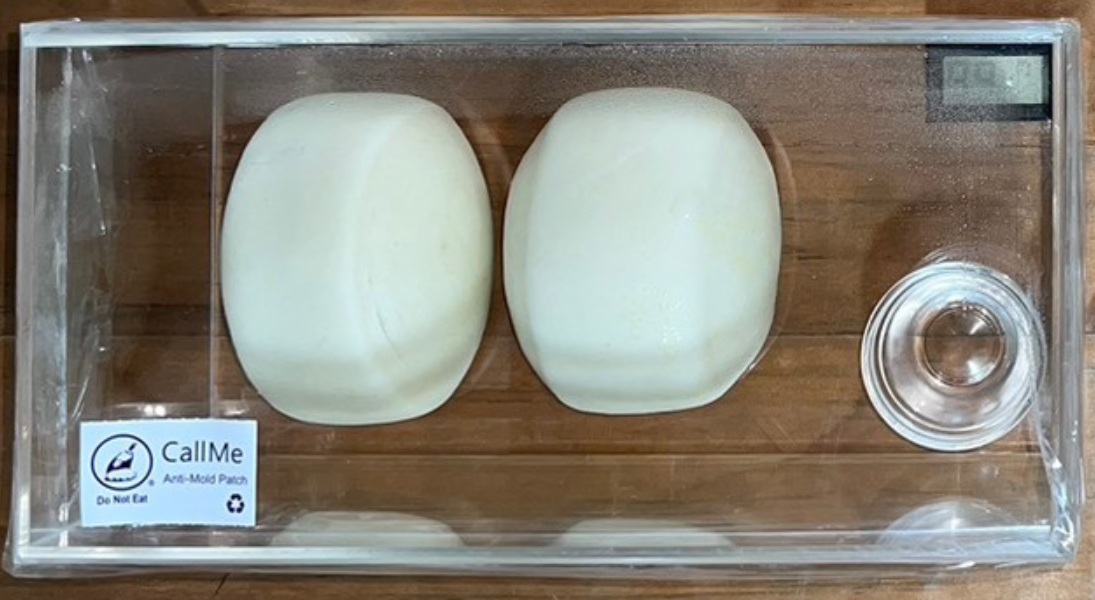
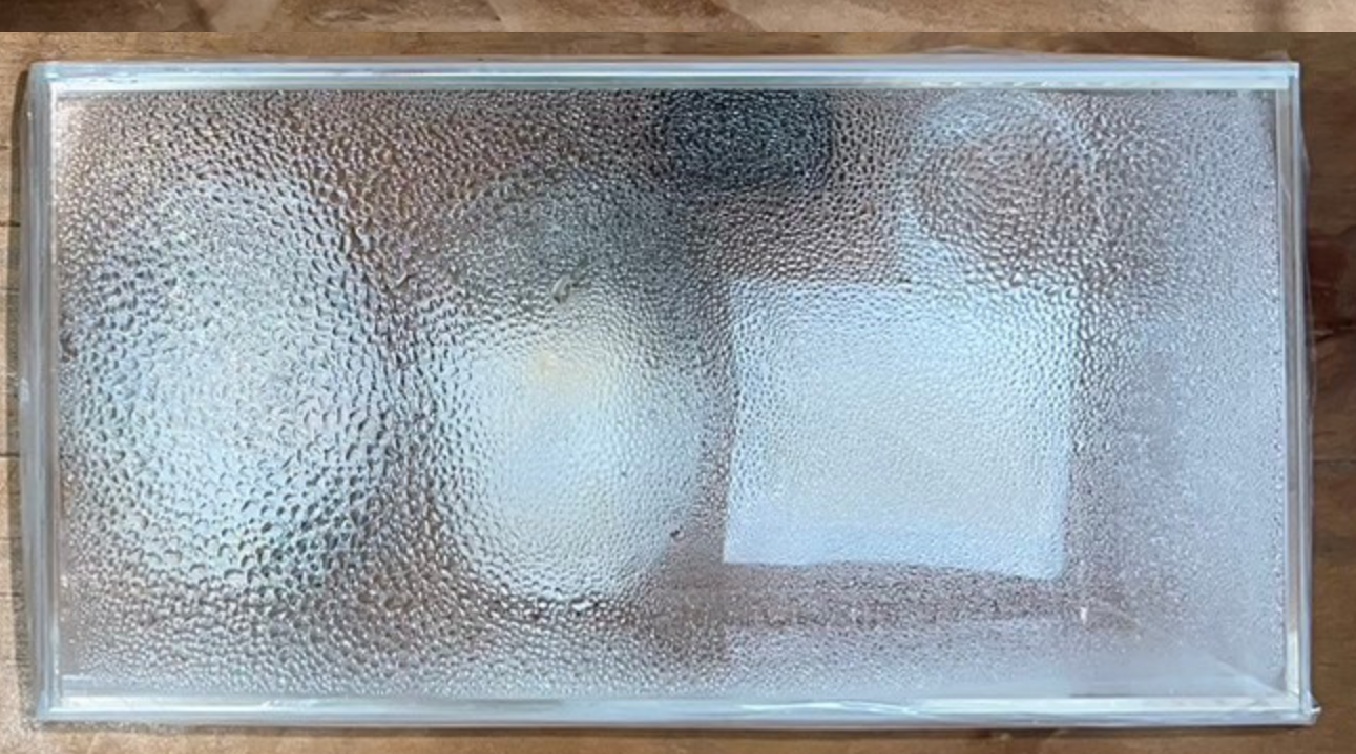
We also tested 100 g of desiccant in the same space for one month.
View attachments
View previewMoisture absorption has a limit.
Desiccants can only reduce humidity; they cannot eliminate moisture completely. There are millions of different types of mould spores, each with different environmental requirements for growth. As long as moisture remains in the air, mould spores may still have the opportunity to grow under suitable conditions.
Furthermore, different desiccants have different moisture absorption capacities. Desiccants with lower absorption capacities tend to become saturated more quickly, making it difficult to maintain effective humidity control within the packaging.
View attachments
View previewEfficacy reports
28-day test
Petri dish test
35-day test
Test under simulated factory conditions
180-day test
Long-term testing in larger spaces
Why Do We Use a Larger Testing Space?
1. Realistic Conditions
A five-litre chamber, approximately the size of a shoebox, better simulates actual packaging conditions.
2. Ingredient Dispersion
Evaluates how effectively volatile ingredients spread and protect a larger space.
3. Reliable Results
Reduces the risk of overestimating performance in small, enclosed spaces.
4. Long-Term Protection
Evaluates whether anti-mould protection can be maintained over an extended period.
Safety reports
Factory training
One-to-one training on correct product use, with practical support.
Find hidden risks
Help factories identify the causes of mould in their operating environment.
Avoid the waste
Consult Call Me when mould is found on finished goods.